TRAVEL TO GHANA
Accra is the capital city of Ghana and there are so many things to see and to do. It’s a good idea to research ahead of time to know what you absolutely want to see and do. Here is a sample of what our itinerary looked like:
knowing we wanted to tour the area, a friend provide a driver and tour guide for us for 4 days. We paid $100 a day plus gas for the service and tipped them at the end of the 4 days. We left Osda Guest House where we were staying at 6:00 am on the first day of our Ghanaian tour.
In those days we toured Accra, Cape Coast and Elmina and Kumasi
Our Ghana Itinerary
Day 1 Accra
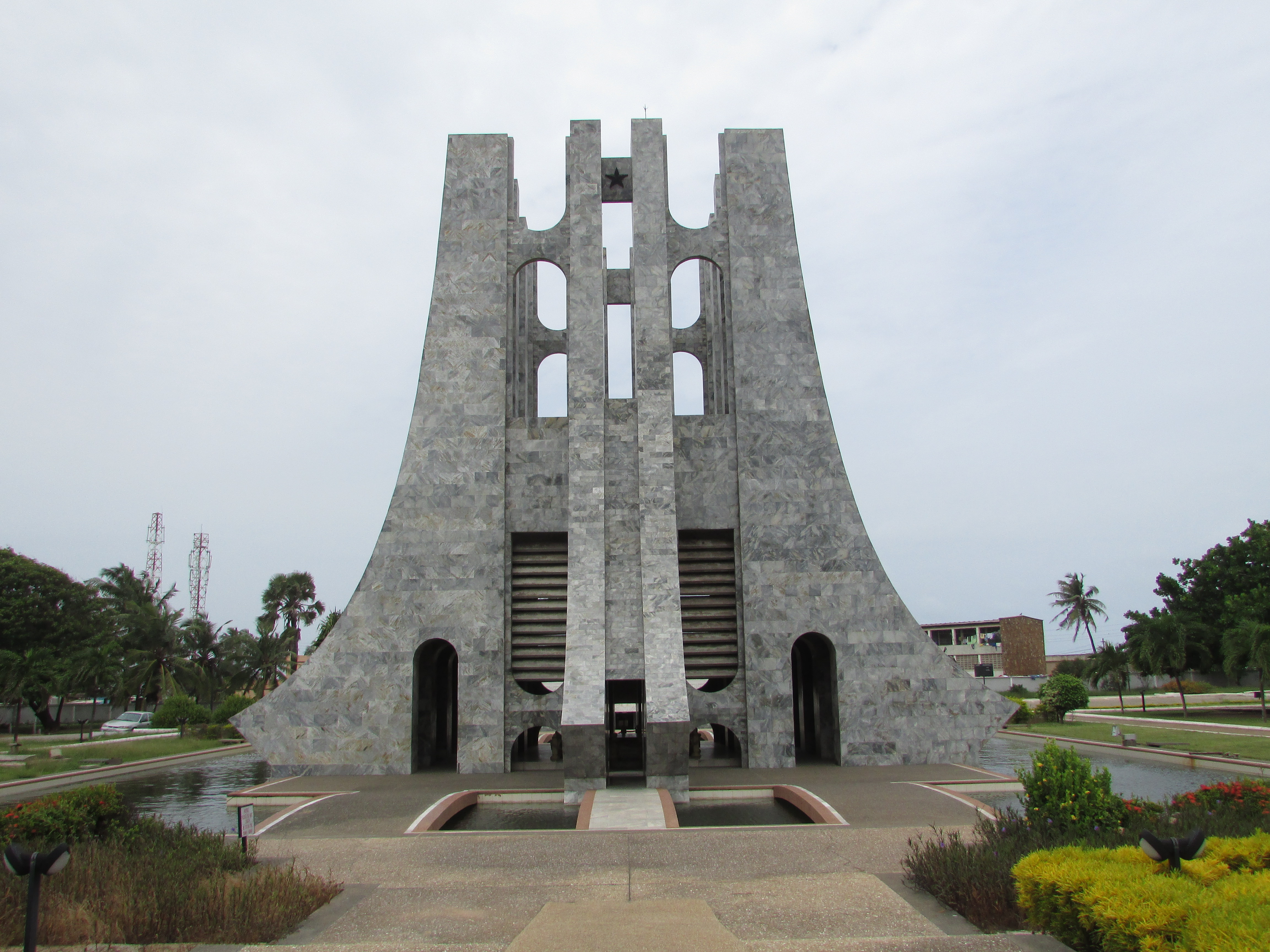
- Kwame Nkrumah Memorial Park and Mausoleum
This site is in remembrance of the Ghanaian national leader and President that lead Ghana to independence from Britain in 1957.
There is an entrance fee about $3 to the Kwame Nkrumah Memorial Park, but no need for a guided tour you can peruse on your own.
2. Black Star Square – Black Star Gate
This is the site of the celebration of Ghana’s independence in 1957.
This historic site is loved and cherished by the Ghanaian people. It is a reminder of the 6th of March, which is the day of Independence from British colonization. This is also the perfect spot to take beautiful photos. The Black Star Square is walking distance to Kwame Nkrumah Memorial park the Accra Sports Stadium and the Independence Arch.
3. Makola Market
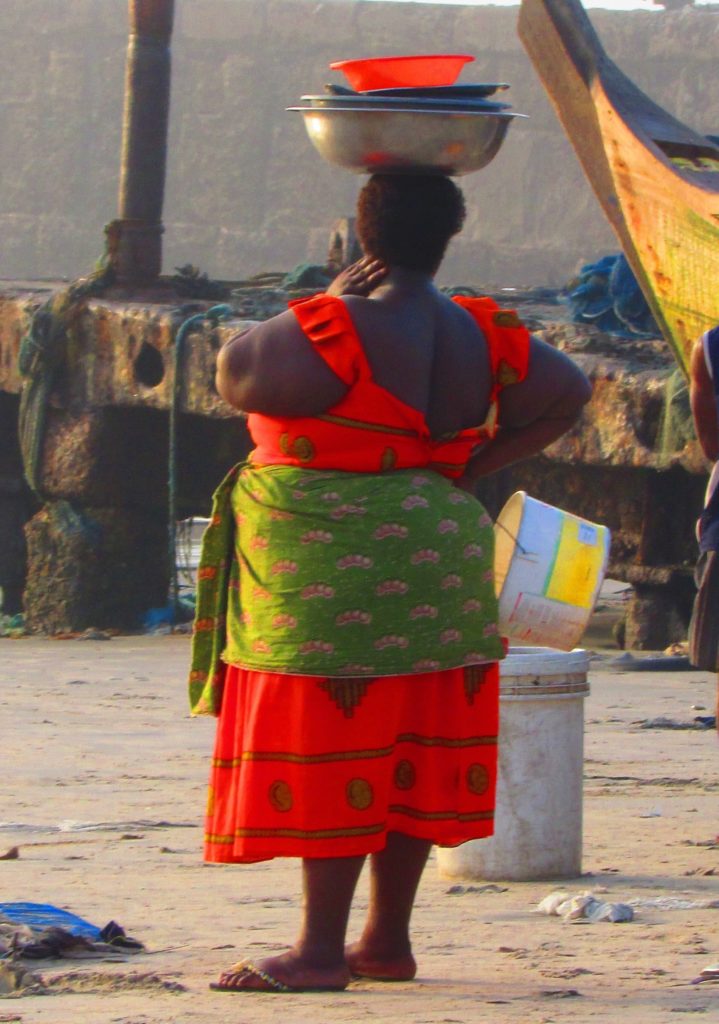
If you really want to get a feel of west Africa to early to the Makola Market. I myself love markets. The smells of food, the colors, the spices ladies with large baskets on their heads filled with goods to sell. They are calmly walking with that heaviness on their heads as if they we wearing a rainhat!
The buzz and noisiness of the crowds, the hissing sounds of marketers trying to lure us over to gander at their items for sale. The entire disorganization of the markets, really makes me feel like I am in Africa, real Africa. The African markets are the lifeline of the people and my kids and I loved every minute of it!
Day 2
(5 am pickup from our guest house)
Accra to Cape Coast
3 hours
Town of Yamoransa
About 3 hours from Accra on our way driving to the Cape Coast Castles, we stopped in a small town in the central region called Yamoransa.
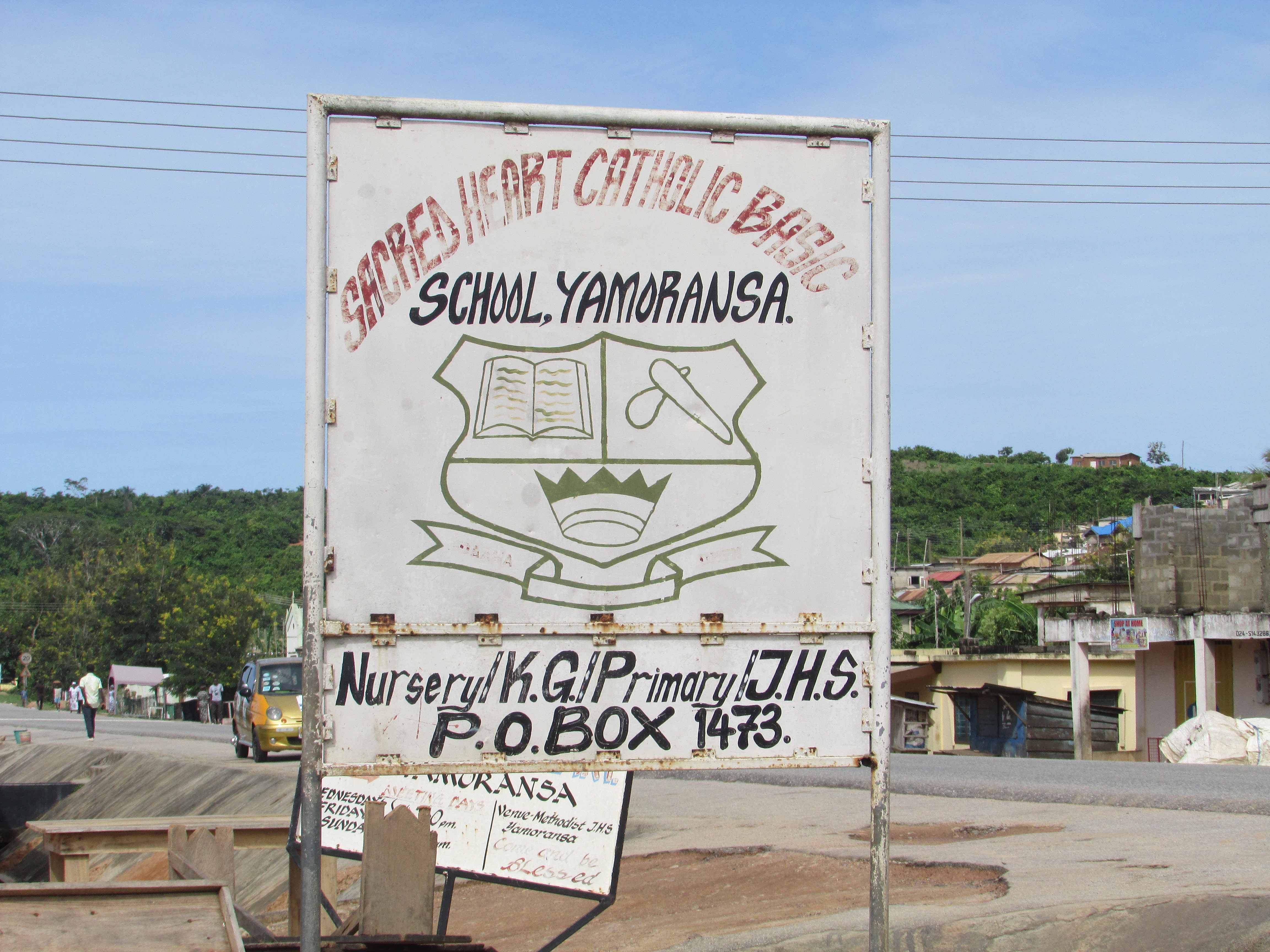
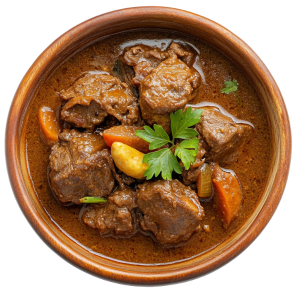
We made a stop in Yamoransa so our Ghanaian driver could purchase a homemade dish of what the Fante people called Kenkey, sold by the Ghanaian ladies on the side of the road.
Kenkey is a corn (maize) mixture fermented and soaked in a hot sauce.
We also stopped by the University of Cape Coast’s newly built library/computer lab that was constructed via a multiyear long service project by Yale University Alumni Service Corp and AFS Ghana.
Cape Coast Slave Castle
You cannot travel to Ghana and not get a historical tour of the Transatlantic Slave Trade and the Cape Coast slave castles.
This single day in Ghana, gave me an internal feeling of temporary despair. I felt angry, almost outraged, inside my body; but on the other hand I had emotions of gratitude to be able to see with my eyes the history of Africa.
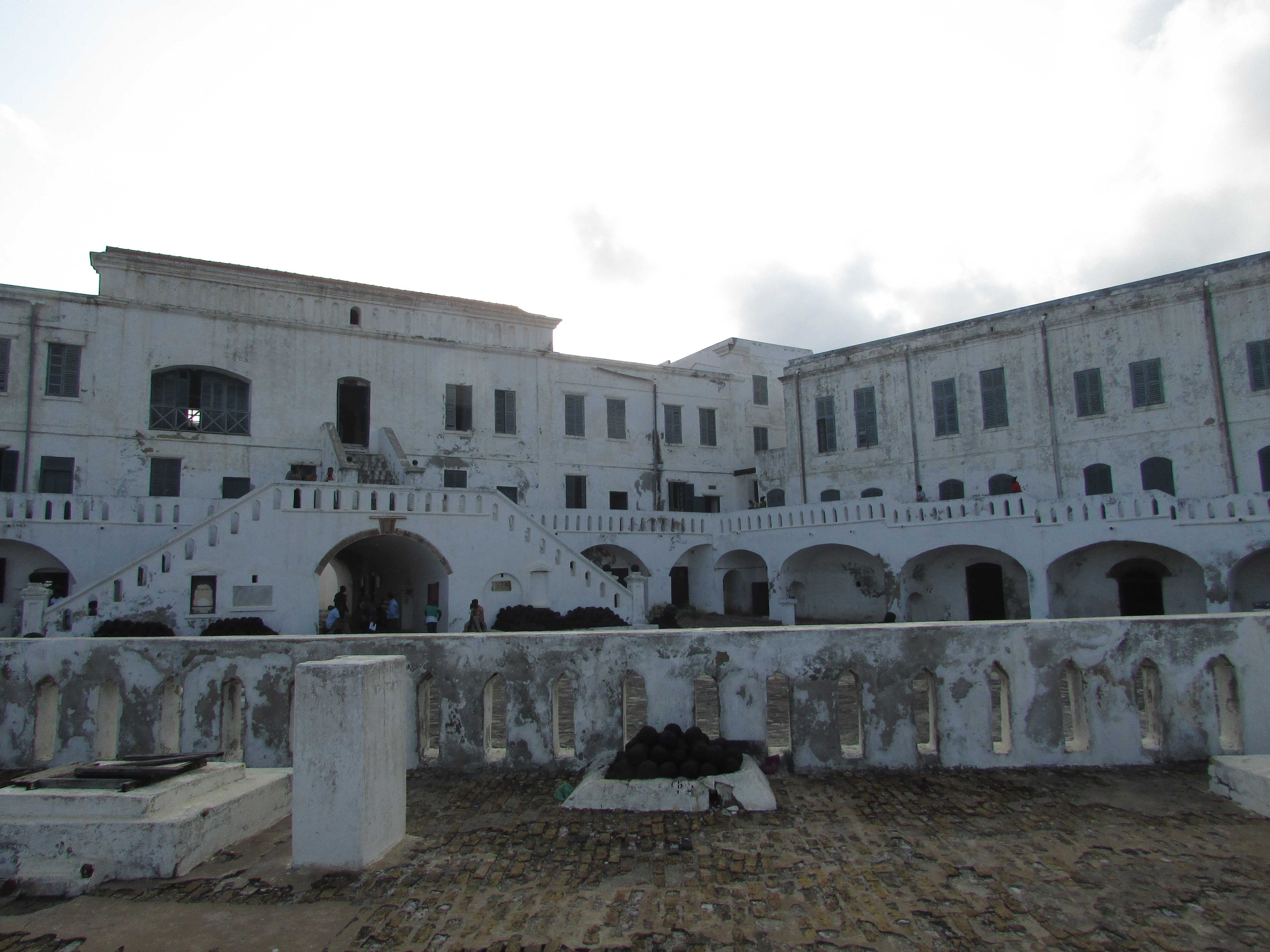
Cape Coast Castle one of about 40 slave castles in western Africa, It is also the largest one of all the slave quarters.
Holding Place for Captured and Enslaved Africans
It was used as a holding place for captured and enslaved people, this castle was the “place of no return,” before Africans were loaded onto ships on their way to the Americas and the Caribbean.
Up to 1500 people were held at any given time. And today when you go through the walking tour of the dungeons and dark, cramped tunnels of the slave quarters, one can only imagine the terrifying and horrific experiences that my descendants went through even before boarding the ship to America.
Elmina Slave Castle
The Elmina castle was the first European trading slave post for all of sub-saharan Africa. The slave castles have a small museum along with a guided tour. Although it makes my stomach turn just rethinking about what my descendants endured; Ghana’s Cape Coast & Elmina castles tour are a sight not to be missed!
Kakum National Park
For the nature lover and the adventurous kind, you will thoroughly enjoy Kakum National Park.
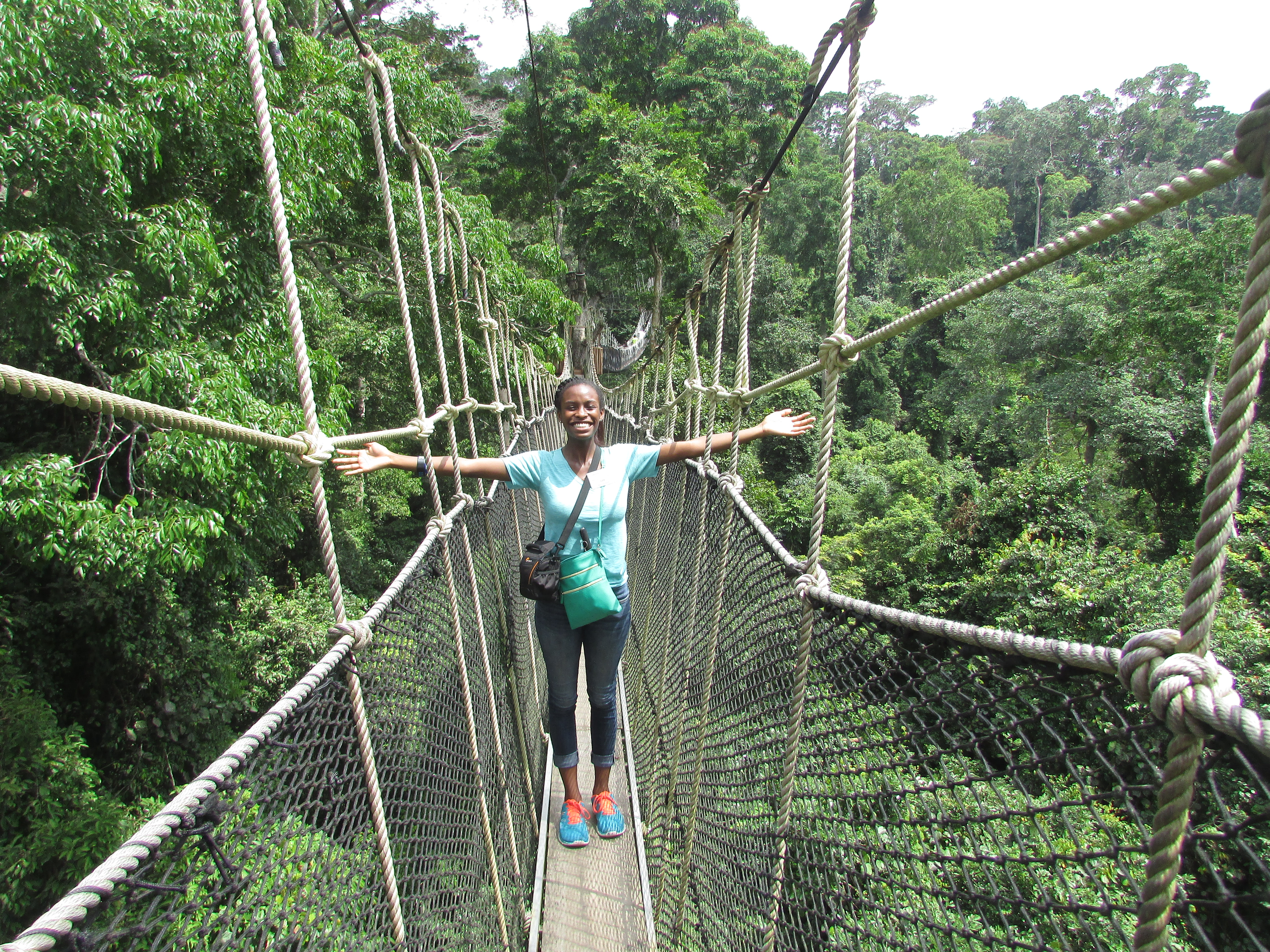
The park was establish in 1931 as a reserve then by the request of the local Ghanaians we established as a national park in 1992.
Being an animal reserve, the most notable of the endangered species are the Diana monkey and African elephants. The park is also a draw for bird watching enthusiast. However the draw to this park for my kids was the infamous Kakum Canopy Walk. The walk consists of seven separate bridges that hang from the trees.
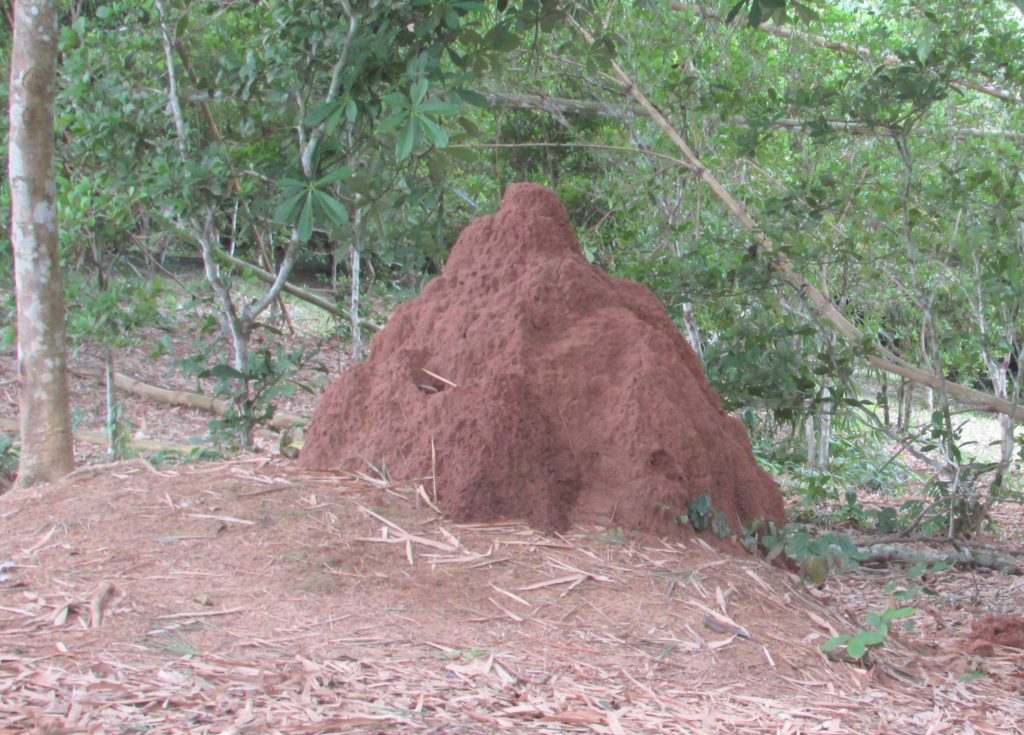
While visiting the park I was in awe at the ant hills…yes, I said it ant hills that were almost as tall as I was
. There were several of them around the park grounds. No one seemed amused or amazed, but I have never seen anything like that in my life. They were huge. Although I didn’t really see any ants they were truly ant hills.
Hans Cottage Botel Restaurant and Hotel – Cape Coast
After the Kakum National Park we had lunch at Hans Cottage Botel (not a type; yes it’s Botel).
After lunch we walked around the grounds, which included a serene pond with live crocodiles and several species of birds. It was a fun afternoon.
While in Cape Coast we stayed overnight before heading off the next morning for the 4-hour drive to Kumasi early the next morning. However, I cannot recommend the hotel on my post.
Although it wasn’t the worst hotel, it could have been much better. However, there are several hotels available in Cape Coast.
Day 3 – Onward to Kumasi, Ghana
Early the next morning, during the 4 hour drive to Kumasi, along the road the driver stopped to get a drink. Of course my western brain was looking for a bottled water stand…when a young boy on the side of the road was selling something round and green.
He began chopping it up and finally handed it to the driver and began chopping another. It was a coconut. The driver bought us all coconut water to try and I must say it was refreshing, not at all what I had expected.
First to my surprise, I thought coconuts were brown and of course, I knew coconuts contained water, but only via the can – as in coconut water or coconut milk.
And this is why I love travel and culture…because of course I know what a coconut is, but in my part of the world, we do not grow coconut trees and I certainly have never quenched my thirst with a straw and a fresh cut coconut.
Adamwomaise & Bonwire Kente Village
Our next two stops were the Adamwomase and Bonwire Kente Village.
Adanwomase and Bonwire are both small towns about 3 miles from each other, where the famous Ghanaian Kente cloth originated. Kente cloth is the traditional patterned fabric worn by Ghananian kings and chiefs.
Infamous Kente Cloth
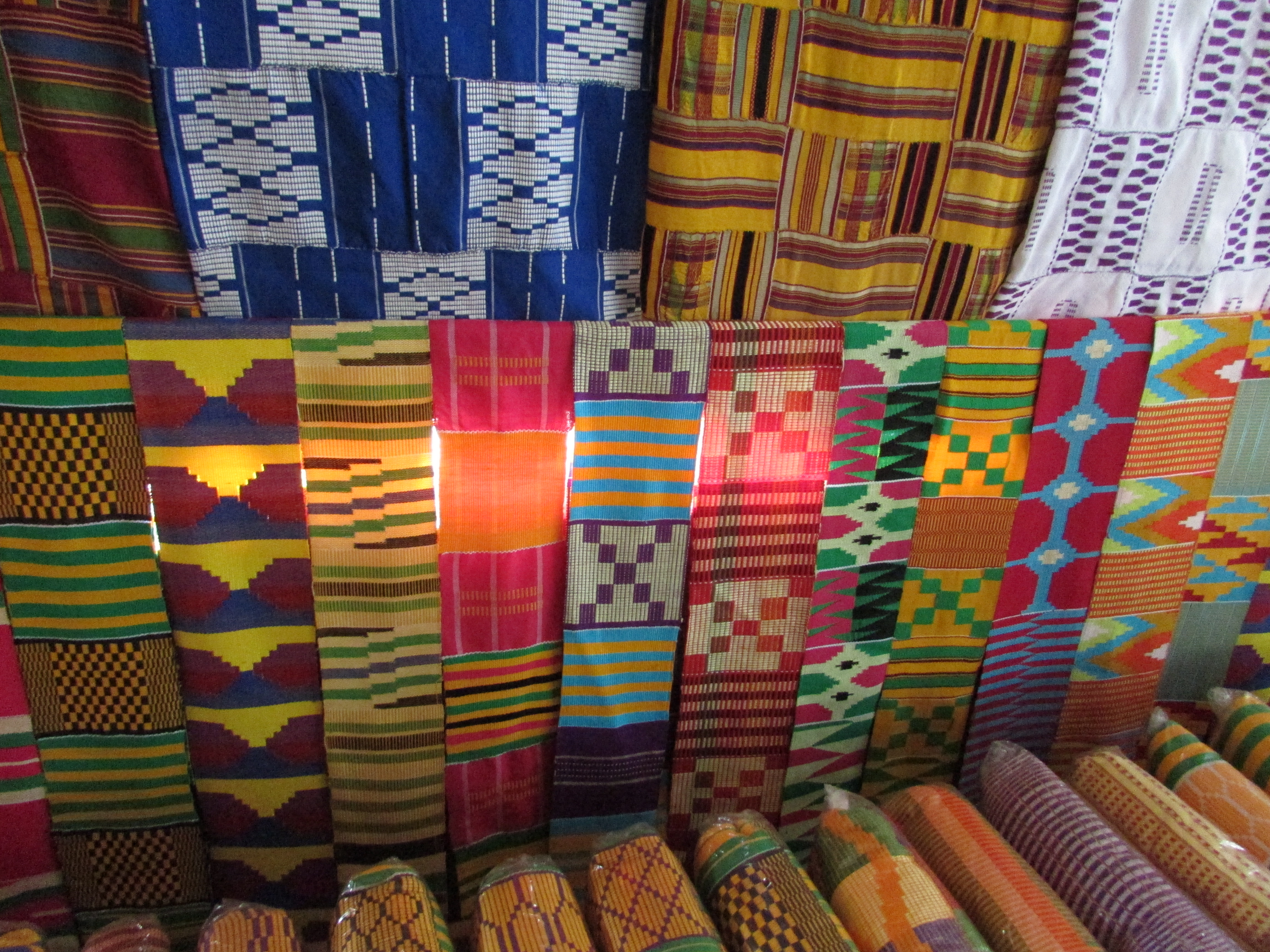
The Kente fabric is woven using a traditional loom usually by men of the town.
Although we see Kente patterned printed cloth in the USA, is just that printed, and not from the authentic weavers of the Kente Village.
We stopped at both places to see Kente weaver.
I really enjoyed Adanwomase it seemed a bit more authentic as Bonwire was also great, but more touristy.
The Kente weavers was one of my favorite places during our travels to Ghana.
it was bright with textile and traditional looming being done. You are able to get a tour with the historical context to the Kente
Miles and Janine even got a chance to try their hand or feet I should say…at weaving a piece of original Kente Cloth.
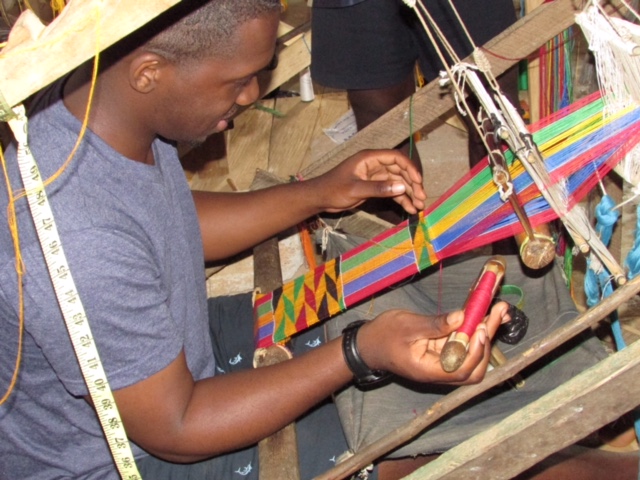
You are able to take a tour and purchase Kente fabric, so be ready to haggle, but please be fair, as this helps sustain their community.
ANDRINKA INK STAMPING
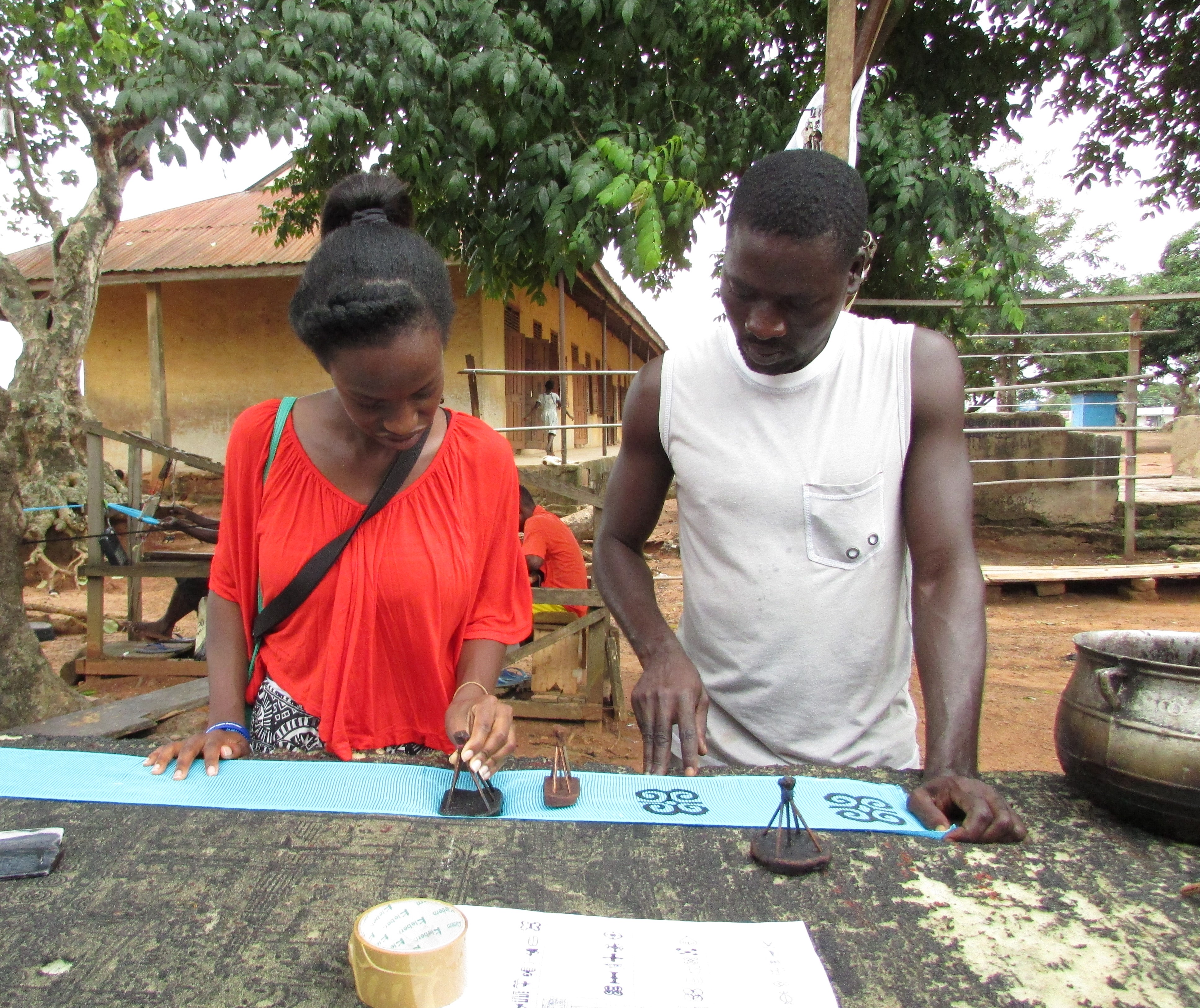
While in the town of Andowmase, we had a mini lesson in dye making and a class in making a few Ghanian prints on Adinkra cloth. Adinkra is one of the traditional cloths of the Asante people.
The cloth is produced by dipping handmade stamps into ink and pressing against the cloth to create a pattern.
The ink for the stamps are made from the bark of the Badie tree and boiled to the desired color then pounded. Various Ghanaian symbols are carved into calabash gourds, making the stamps for printing on the cloth. There was a small fee for the mini class and to make an adinkra cloth.
Kumasi Home of the Ashanti People
You cannot travel to Ghana and not find time to visit Kumasi
Kumasi Center for National Culture
Prempeh II Jubilee Museum
ocated within the National Cultural Centre, the Prempeh II Jubilee Museum tells the story of the Asante Kingdom, a state among the most powerful and wealthy in Africa at its pinnacle of power in the 18th century.
The small museum showcases a selection of artifacts and memorabilia relating to the Asante people and royalty. Items of note include Asante King Prempeh II’s war attire and ceremonial outfits, palace furnishings, jewelry and royal insignia. You’ll also find a recreation of the Golden Stool, the literal seat of power of the Asante Kingdom and an item that sparked the final conflict between the British Imperial government and the Asante Empire.
The Craft Center is across the walkway from the Manhyia Palace museum. You will be able to see artisans making pottery, brass and even a gift shop with many of the items being sold.
Manhiya Palace Museum – Asantehene’s Palace
This museum covers the history of the Ashanti Kingdom in the Kumasi area of Ghana. The museum was built in 1925 by the British to accept the return of Prempeh, who was in exile for 25 years. Manhyia Palace was residence of the several Ashanti Kings until 1974.
The current traditional king of Ghana’s Asante people, the Asantehene Otumfuo Osei Tutu II celebrates 20 years on the Royal Stool. Upon entering the museum you will be shown a film to understand what you will seeing. The museum is very visually interesting including original furniture and wax figures.
Palace Built by the British
In 1925, the British government built the Manhyia Palace as a home for Prempeh I upon his return from exile in the Seychelles, and it remained a royal residence for Prempeh I and Prempeh II until the early 1970s.
Today, the Asantehene’s Palace houses the Manhyia Palace Museum, opened in 1995 to display the residence’s original furnishings and royal memorabilia, including Asanteman’s first television and wax statues of several kings and queens of Ashanti. Besides the museum collection, the building itself is a good example of traditional Ashanti architecture from the turn of the century.
Bantama High Street – Kumasi Ghana
Early evening we took a stroll down Bantama High Street, this street of open air African style pubs and restaurants. A great place to sit have a meal, snack or beverage and people watch or listen to music during the evening entertainment.
Where we stayed in Kumasi
Okumah Hotel – Kumasi Ghana
Location – Off BM Kuffour Avenue – Kaase
We stayed in Okumah Hotel, which is 3-star hotel. It was reasonably priced and clean, nothing special..but clean. Because we only had 2 days in Kumasi, we didn’t spend a lot of time in the hotel. I would definitely stay at the Okuma Hotel again.
Day 4 Kumasi – Return to Accra
VILLA SANKOFA – Although we did not stay here. This is where I will stay on my next trip to Kumasi.
After we booked our hotel, our friends from Accra mentioned that the Kumasi guest lodge called Villa Sankofa was a great place to stay and was reasonably priced. Reviews say the place was clean and spacious. On our next visit to Kumasi we will certainly give Villa Sankofa a try.
Evening of Day 4 – Back to Osda Guest House Accra
Here is what we did the remaining 4 days we had left in Ghana
OSU – Oxford Street
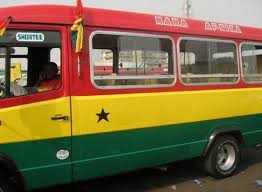
Osu is a suburb of Accra, also known as Oxford Street, here you will find hawkers and stalls on both sides of the street. This trendy avenue has a cosmopolitan feel with hip coffee shops and eateries along with bars, restaurants along with hawkers, street food stalls. It’s easy to get to Osu, either catch a taxi, Uber or catch a tro-tro as we did to Danquah Circle on Ring Road. This is a major intersection to Osu. As the night fell, out came the night markets — selling local street food.
Osu is known for it’s eateries, restaurants and coffee and tea shops. I couldn’t believe all the delicious local food – can you believe my kids wanted KFC that night for dinner. However, the next night we came back to OSU as it was a lot of fun and at at this fabulous Thai Restaurnt.
2. Zion Thai Restaurant – Mission Street, Osu Ghana
3. Jamestown Ussertown (Old Accra)
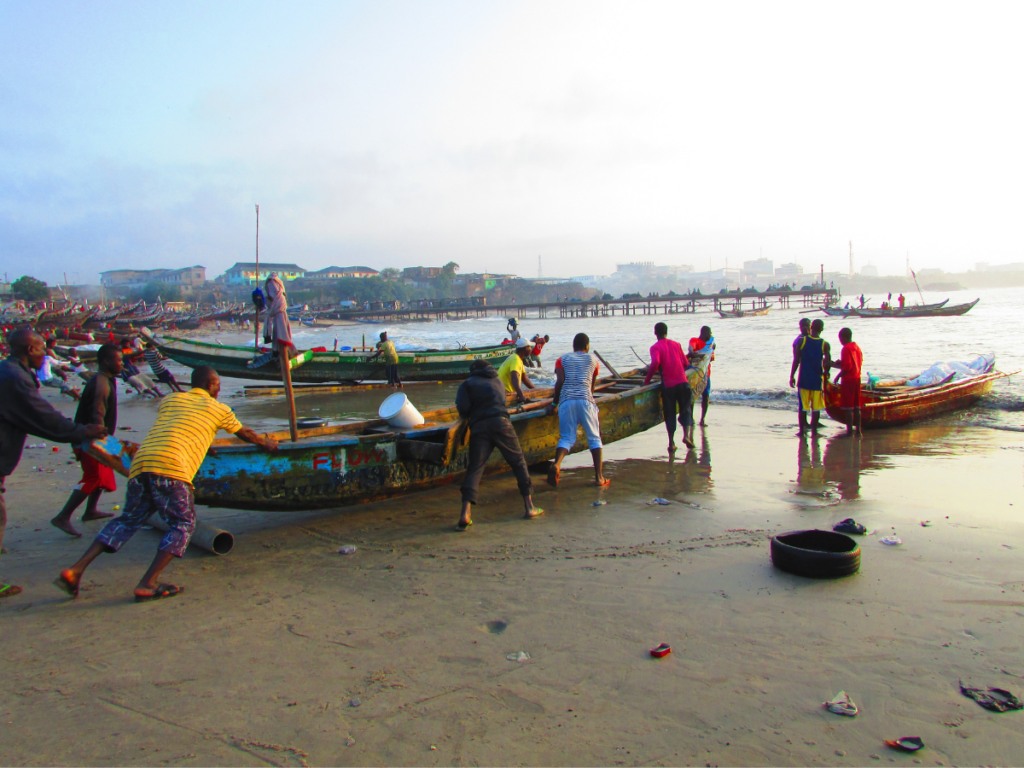
This was on my list of things to do in Accra. I wanted to see the fishermen in Jamestown, as I have always seen photos of the brightly colored fishing boats. Being one of the more impoverished areas of Accra, I wasn’t sure what to expect.
The driver made arrangements to picked up at our guesthouse at 5:30 am.
While still dark once we arrived at Jamestown, only to see hundreds of fishermen getting ready to go out to see to catch their fish for the day.
Jamestown is an impoverished area, the homes are basically iron shacks, but the energy and vibrant colors of fishing boats and flags as the sun was rising was remarkable.
The Jamestown locals warned us not walk in certain areas of the beach, as it was used as the beachside bathroom complete with human poop
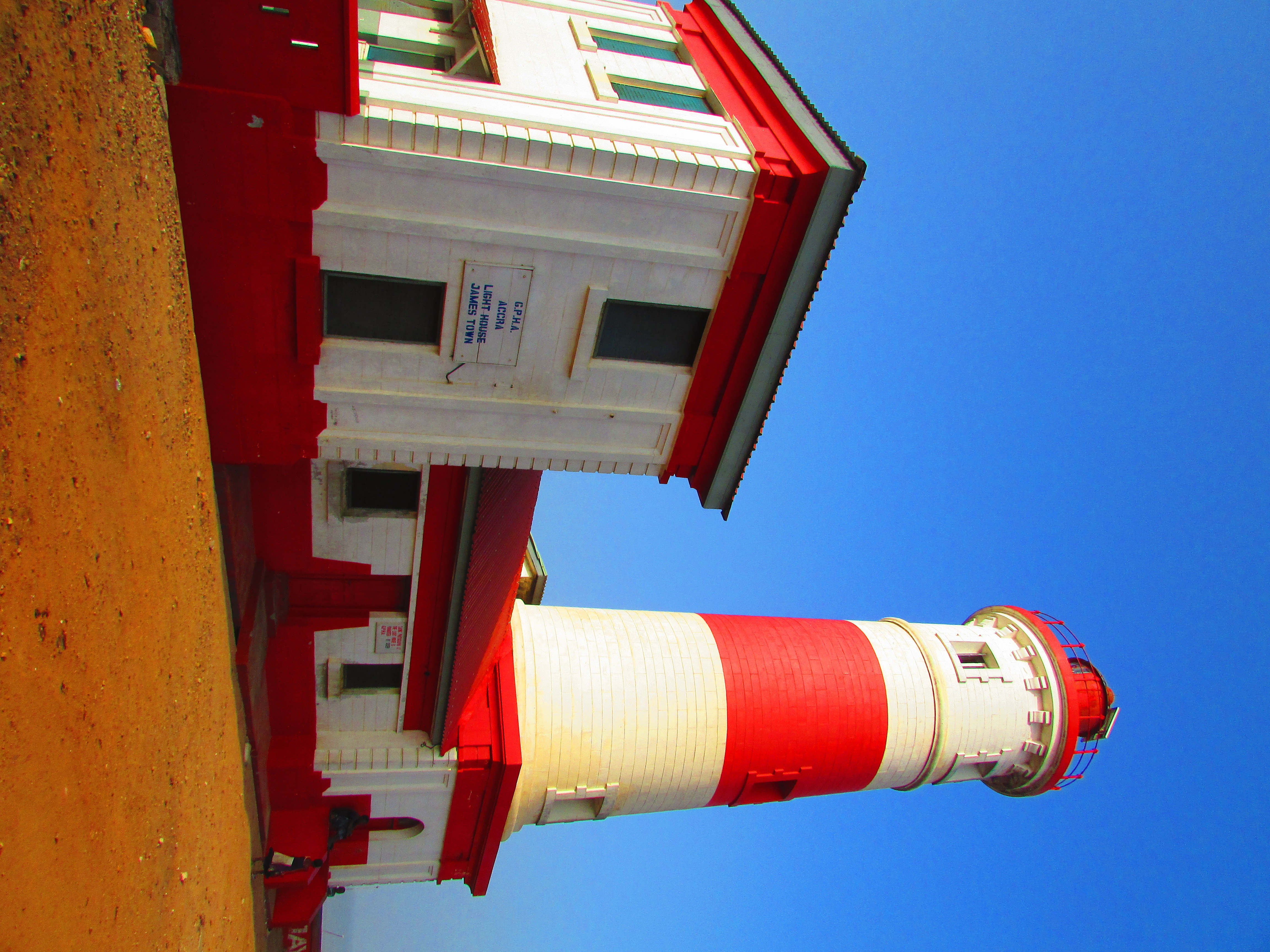
As we walked to take photos of the nearby lighthouse, we saw remnants of British forts and compounds.
According to the locals, rumor has it that the livelihood and culture of Jamestown is under threat to be replaced by a factory backed by the Chinese government as many areas of Ghana.
4. Take-Out at Pat’s Restaurant
5. Visit to Labadi Beach
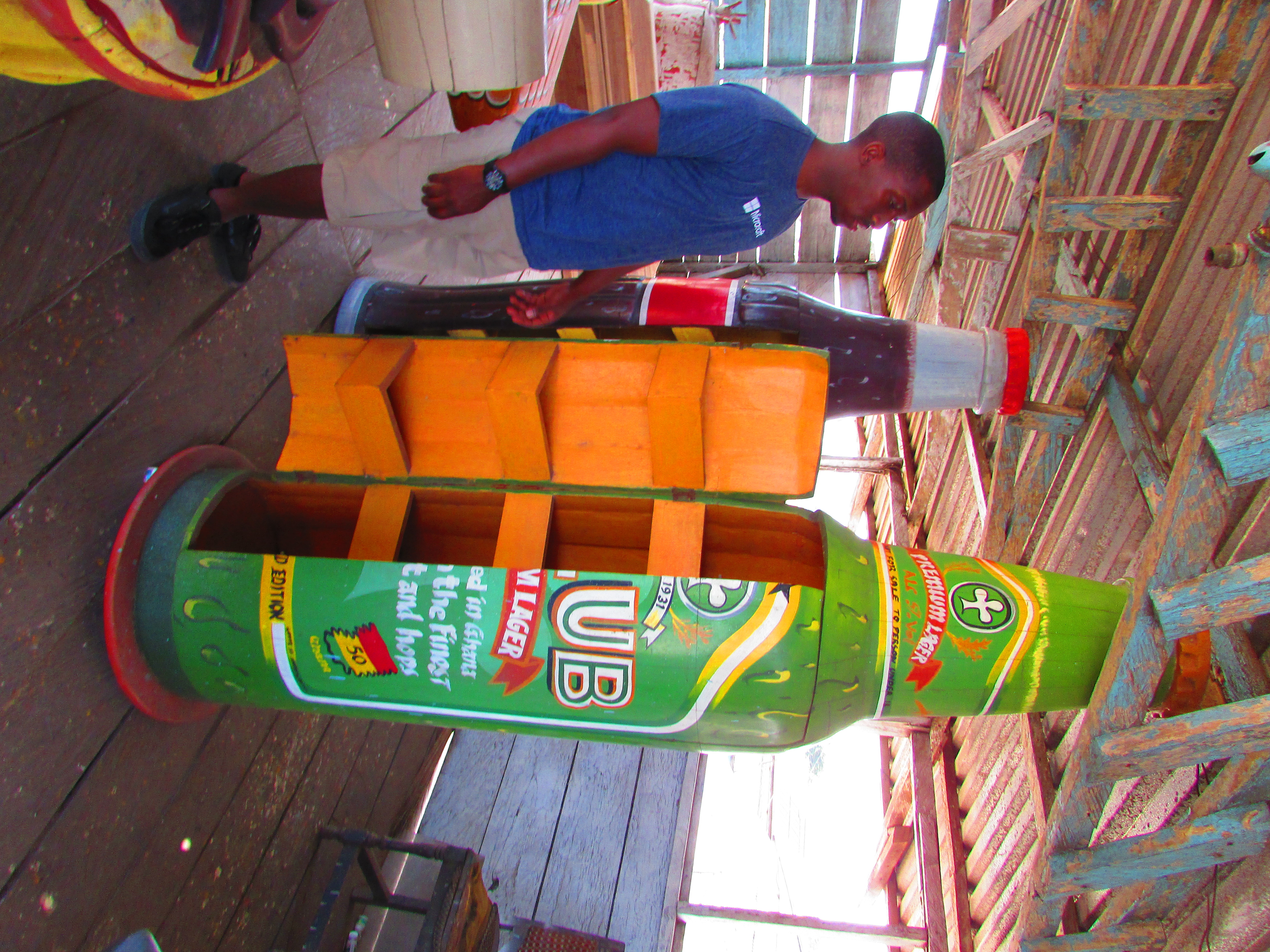
6. Town of Teshie – Exotic Coffin Makers
7. Hair Braiding – Salon Near Our Guest House
8. Ride in a Tro-Tro
Leave a Reply