Our trip to Kenya was pre-Covid, but friends of mine will be traveling to Nairobi soon, and since I was giving them this information anyway. I figured it’s time to write a Nairobi blog post.
Our trip to Kenya was not to see the roaming of animals or visiting one of the well-known safari tours. We were in Kenya and thought it best to visit our many foreign exchange students that we had hosted in the USA.
Although they were high school foreign exchange students, most are now adults either attending university, graduate school or married with children of their own.
Our plan was to visit all our Kenyan students, by either traveling to their homeland or having them meet up with us, as a few of them are still in university.
After spending a couple weeks in Kenya, my daughter and I thought it would be cool to cross the border into Tanzania and visit our students from Dar es Salam, Arusha and Zanzibar that we had hosted as far back as 2011.
Fun among the Locals in Kenya
But no matter the reason, when in Africa we must hangout among the locals, visit any historical sites and museums; and for sure visit our African markets. The Maasai markets are our favorite. They are always vibrant, bright, and bustling with vendors.
Because we only had a few days in Nairobi before heading to Mombasa, here are our favorite things to do when we were in Nairobi, Kenya
Tip: When venturing out in Nairobi, make sure you have plenty Kenyan Shillings on hand for shopping and entrance fees.
Who are the Maasai?
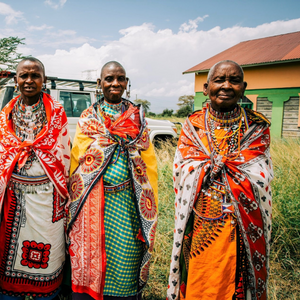
The Maasai tribe are an indigenous ethnic group of people settled in Kenya and northern Tanzania.
Because of their distinct cultural traditions, customs, clothing and having their homesteads near the many national game reserves of East Africa, the Maasai are among the most fascinating African ethnic groups and are well known for their adornment and inherit skill.
Despite this trend of modernization, the Maasai people are still known for their traditional colorful Shuka, cowhide sandals, huts, “natural fences” for their homesteads and the beautiful beading and adornment that is crafted mainly by the Maasai woman.
The Maasai Market
One of our favorite shopping experiences in Nairobi was the Maasai Market.
The Maasai Market is an experienced not to be missed. They sell everything from clothes, sandals and traditional Maasai beading and handcrafted artwork is sold by vendors at the Maasai market.
The main Maasai market is open Saturdays and is located behind the Hilton Hotel and the Nairobi High Court parking lot in downtown Nairobi.
After spending a couple of hours at the main market located in the downtown high court parking lot, we caught an Uber over to one of the smaller Maasai markets located at the Prestige Plaza that is on Ngong Road. This market at Prestige Plaza operates from about 8:00 am to 7:00 pm every day except Mondays.
Do not get overwhelmed at the Maasai Market
There will be bustling crowds and vendors calling you from everywhere trying to lure you spend at their stall or shop. Hawkers also will be attempting to stop you to show you their wares as you walk around.
Although this style of shopping is appealing to me and my family and my daughter can haggle as good as any local, you may easily become overwhelmed, if you don’t have an open mind.
So, take all this with a grain of salt. Ignore the hawkers and make sure you shop at a variety of vendors.
First, walk around and get a feel for the market
We usually walk around the market to get an idea of the layout and what is being sold; and prices from various vendors – before we begin spending our money. We usually try to shop at as many vendors as possible, especially when their handmade crafts are reasonably priced and beautifully hand crafted.
Don’t rush when at the Maasai market
Take the time to walk around the whole market to see the variety of souvenir, artwork and artisan crafts before deciding what you want to purchase.
Make sure you have local currency at most African markets
Having Kenyan shillings will make your shopping more pleasurable. Credit cards are not the norm, so it is best to get local currency at a money exchange or at a Bank ATM beforehand.
Keep your money secure
This may be common sense, but do not pull out all your cash in the open market; and do not keep your wallet in your back pocket as pickpockets are everywhere in the world and especially at crowded markets.
Most of all have an open mind and keep in mind that this is how these vendors make a living. On the other hand, do not get ripped off and haggle. Get a fare price for the items that you want to buy. If you need some advise on haggling here is a blog post on how to haggle.
The Nairobi Tea Room – a sight to see
If you think you are going here for a warm cup of brew, think again. The Tea Room is the craziest, loud, horn honking, brouhaha of a bus station that I have ever seen. So, if you are feeling a bit adventurous the Nairobi Tea Room matatu state is not to be missed.
Tea Room is the stage, entry point and rest stop for the matatu’s in Nairobi.
What is a Matatu?
A Matatu is the local bus that travels all around Nairobi getting people to and from work and from their village home to the city.
Matatu is a Swahili term meaning “three” from the 70s when patrons paid 3 cents to get from one point to another.
The matatu touts hanging out the bus doors while driving in the busy city, and drivers are known for causing chaos on the busy streets with live colorful music, not following traffic rules to stay ahead of their competitors.
Matatu in Nairobi – the Funky Minibus
How to Ride a Matatu and What to Expect
One thing that makes Kenya warm in my heart is its public transportation — minibuses called the Matatu.
Whether the Matatu in Kenya, Tro-Tro in Ghana or the Chapa in Mozambique. They are all similar in their loud, brassy, crowded spice of public transportation in African countries.
In Nairobi the Matatu minibuses are Kenyan citizen’s daily mode of transportation.
Of course, you can ride a taxi or call an uber, which we did from time to time, but to get the real feel of Africa, you must take a ride in a matatu.
Now as I aways say, keep an open mind, you will be sitting very close to other passengers and possibly next to a chicken or baby lamb. But all in all, it was an experience not to be missed when visiting the motherland.
Luckily, we were escorted to the Tea Room by one of our students, who met us to have a day visit to her rural home in Nyeri, Kenya.
I was in awe when I saw the buses coming and going every which way. To me there was not a good system for these vehicles or even enough traffic lights or stop signs to advise the drivers when to stop and go and most importantly, you had to be an acrobat when a pedestrian cross the street at the Tea Room matatu stage.
David Sheldrick Wildlife Trust Baby Elephant Orphanage
For almost half a century, the David Sheldrick Wildlife trust has been known for it’s Orphans Project for elephant’s rescue and rehabilitation in Nairobi Kenya. The Trust has many projects and ways to donate and help the mission of helping orphaned elephants and other endangered wildlife.
The Elephant mission is open every day except Christmas from 11:00 – 12:00 pm.
Note: You must make a reservation a few weeks ahead before visiting the elephant orphanage.
As of 2022 – You cannot make a same day reservation.
The Trust’s main in Nairobi is often referred to as the Nairobi Nursery, which is in Nairobi National Park (KWS Central Workshop Gate on Magadi Road)
2022 Rules and Cost of Admission for Baby Elephant Orphanage
• Cost of admission and rules to David Sheldrick Wildlife Elephant Trust as of January 2022:
• The minimum donation for entry is $15 or (1500 Kenyan shillings) per person for ages 12 and over and $5 for those under age 12. (Additional donations are always welcome)
• This fee is collected upon entry, in Kenyan shillings on the day of your visit.
• Note: New Rules for entry into the elephant orphanage since the onset of Covid19.
• All Guests must wear a face mask for the duration of their visit to the elephant orphanage
• On-Site Protocols: The visiting hour takes place from 11am to 12 noon.
• If driving, the parking lot gets full quickly so make sure you arrive early at least 45 minutes ahead of schedule as it takes time to allow participants to pay and enter the sanctuary.
New Covid19 Rules:
• Prior to entry, all guests must sanitize and complete a temperature check. Smoking and vaping is prohibited, and we ask that phones be set to silent.
• Respecting the Elephant Orphans: Every orphan in our care will ultimately be reintegrated back into the wild.
• For this reason, we carefully limit their exposure to humans, and only Keepers are allowed to feed and directly interact with them. However, some of the more mischievous elephants may choose to extend a trunk in greeting or bump along the visitor fencing.
Nairobi National Park
Although we did not have time to visit the Nairobi National Park, there was a new entry point to the park that is very close by the Sheldrick Wildlife Elephant Orphanage.
The new entrance to the National Park is at the Kenya Wildlife Service Workshop gate on Magadi Road. The Nairobi National Park entry gate is located just before the entrance to the Sheldrick Wildlife Elephant Orphanage.
Although there is a separate entrance fee to the Nairobi National Park, with the entrance so close, guests could experience both attractions in the same day.
seamlessly going from the Nursery to the “World’s Wildlife Capital.” Please note that access to Nairobi National Park is managed by KWS and requires a separate entry fee.
Giraffe Center
The Giraffe Center was one of my favorite activities in Kenya. Have I seen Giraffes in my lifetime? Yes, I have…in a zoo. But I did not realize the magnitude and personality of real live African giraffes. They were beautiful with their long legs and neck. And what were always looking for their next snack, that you could purchase at the center.
I must be honest; I’m an animal lover from afar.
It’s enjoyable for me to see animals at a distance, but the fact that those giraffes could come right up to your face, if you were not careful, was a sight to see and a lot of fun for my daughter and me.
Cost: Tickets to the Giraffe Center can be ordered online. As of 2022, Tickets for non-resident are about $15 for adults and $8 for children.
What I liked most about the Giraffe Center:
1. The beauty of the Giraffes.
2. They had a great souvenir shop.
3. They had a Tea House where we could sit and relax and get a snack after a day in the sun.
4. The center had a myriad of Giraffe staff walking around the two- story sanctuary to answer your questions.
5. It was a fun activity for any age, not to be missed.
Karura Forest Reserve
For nature lovers visiting Nairobi, the Karura Forest is a relaxing attraction with well marked and trails. In the Karura you will find a waterfall, the Mau-Mau caves and well marked trails for hiker and joggers alike.
The Karura Forest is a great value. The forest has a $1 entry fee for adults, and a small parking fee of less then $5 for cars.
Plastic water bottles are prohibited in the park, so make sure you bring your own water bottle for hydration while in the park.
Here are other ideas for activities while in Nairobi:
• Bomas of Kenya
• Karen Blixen Museum
• Hell’s Gate National Park
• Kenya National Museum
Leave a Reply